Projects

VillaFact App

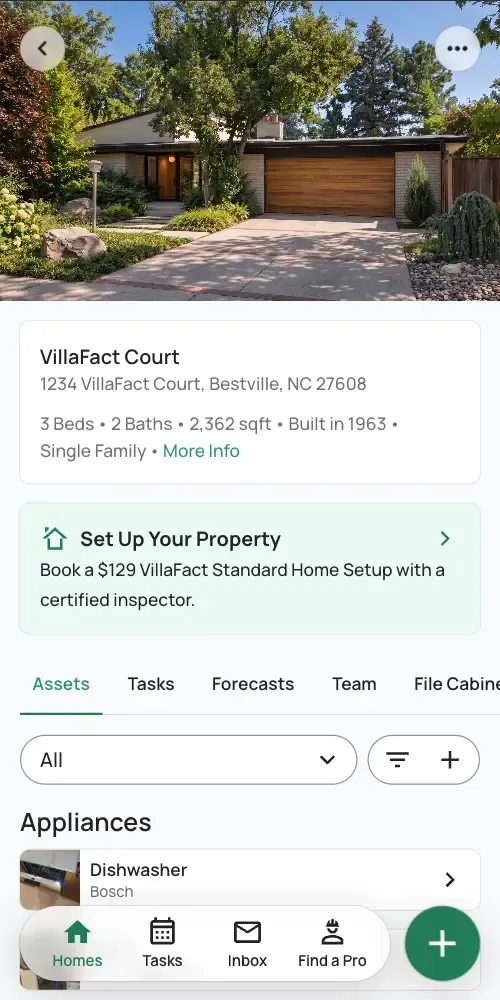
VillaFact is a property intelligence platform built around one idea: every home should have a "Home Record," a single, living source of truth for its systems, appliances, condition and risks. It serves vacation rental operators, property managers, investment and second-home owners, and the vendors and insurers who work with them. Owners and managers stop relying on guesswork and get verified facts, photos and documents that grow with the property and make it easier to sell, rent, insure and maintain.

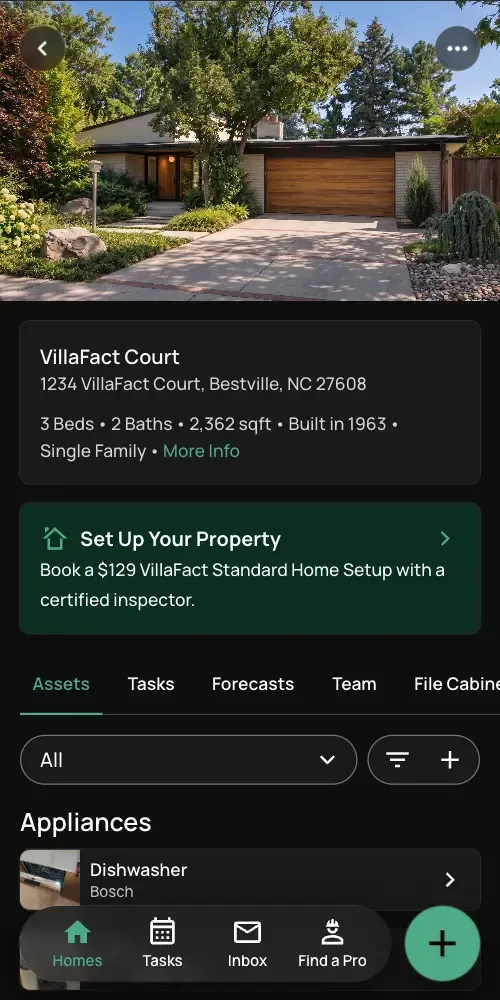
Screenshot of Villafact

On the engineering team, I owned the front-end styling and UI system. I designed and built the styling foundation on Tailwind CSS 4, with semantic color tokens, text and background aliases, typography, spacing and breakpoint utilities, and full light and dark mode support. On top of Nuxt UI 4, I created and maintained a library of shared components (drawers, confirmation flows, alerts, headings, form fields, empty and loading states, and more), so every screen in the product looks and behaves the same way. I worked closely with our design team to turn their mockups and design patterns into reusable, documented components. I also wrote UI guidelines and custom lint rules, so the design language holds up as the codebase grows.

The app itself is a Nuxt and Vue 3 single-page application written in TypeScript. It uses TanStack Query for data fetching, Zod for validation and Firebase for authentication, Firestore data and storage. Capacitor ships it as a native iOS and Android app, and it also runs as an installable PWA with offline support. Behind it, Firebase Cloud Functions and Google's Gemini models power AI features such as photo analysis and property data enrichment. Building VillaFact's UI system taught me how much a well-built design foundation lets a product team move fast without losing polish, and how to make a complex, data-heavy product feel simple for the homeowners and managers who use it every day.

Aurora Communities

As a Senior Software Engineer, I helped architect and deliver Aurora, our next-generation community platform. Aurora is built on Next.js with a GraphQL data layer atop a resilient Java back end. Aurora pairs a customized Bootstrap foundation with a CSS-variable theming engine, allowing each community to adopt its own brand while sharing a unified, performant core.

Some notable communities include:

Past Projects

Admit Reader

Lead UI Designer/Lead UI Developer

The admit reader project was designed to be an easy way for users to access the Admit Application Management system on mobile devices, such as phones and tablets. The project also let users work with student's data offline. Project was built on Bootstrap 2.3.

ePay Redesign

Lead UI Developer

The ePay payment platform was redesigned to be user friendly, responsive, and simple way to pay for online admission forms. This replaced many custom payment pages and the unstyled default payment look with a responsively designed interface. Project was built on Bootstrap 2.1 and adapted for used on 2.2.

ApplyWeb Account Pages Redesign

Lead UI Developer

The ApplyWeb account pages were redesigned to be a mobile-friendly, universal login system for all of the ApplyWeb admission forms. The project involved designing the user workflow for account creation and legacy account upgrades. The project also used LESS CSS to apply client branding where appropriate. Project was built on Bootstrap 2.3.

Responsive Forms System

Lead UI Developer/UI Designer

On this project, we integrated the new ApplyWeb branding into our forms system. The new forms responsive design system was built to accommodate the needs of the web developers as well as allowing for layout customization requests from clients. Complete documentation of this new system was also a must for this project, with a wiki being created for quick reference. Project was built on Bootstrap 3.2.

New Program Manager Interface

Lead UI Designer/Lead UI Developer

The original major selection widget for ApplyWeb admission forms, AKA Program Manager, was built in Smart GWT. For better integration with the new responsive forms, it was built as a modern JavaScript-based web application.

User Conference Calendar

Lead UI Designer/Lead Developer

The user conference calendar was an app made in Backbone.js that utilized HTML5 offline storage. It was designed on the same responsive shell that is used by the ApplyWeb responsive applications.